This post includes a brief plot summary and a review of the 2024 Chinese drama “The Tale of Rose”. Beware of spoilers.
“The Tale of Rose” is a romance drama directed by Wang Jun, starring Liu Yifei as Huang Yimei.
When I clicked on “The Tale of Rose”, I didn’t know what to expect. And let me tell you, I got more than what I expected.
Honestly, I was never impressed by Liu Yifei’s acting, but watching “The Tale of Rose” changed my mind. Although Liu Yifei is not the most versatile actress, she nailed the role of “Rose”, because it suits her like a glove.
Short Review: “The Tale of Rose” is a wonderful drama. The cinematography is intimate, and the storytelling is well-executed, providing the viewer a unique experience. While watching “The Tale of Rose”, the audience will feel that they’ve stepped into the pages of someone’s personal diary. Liu Yifei gave one of her best performances in recent years. The supporting cast is stellar, especially Wan Qian, who gave us a layered and gut-wrenching portrayal of a “survivor”.
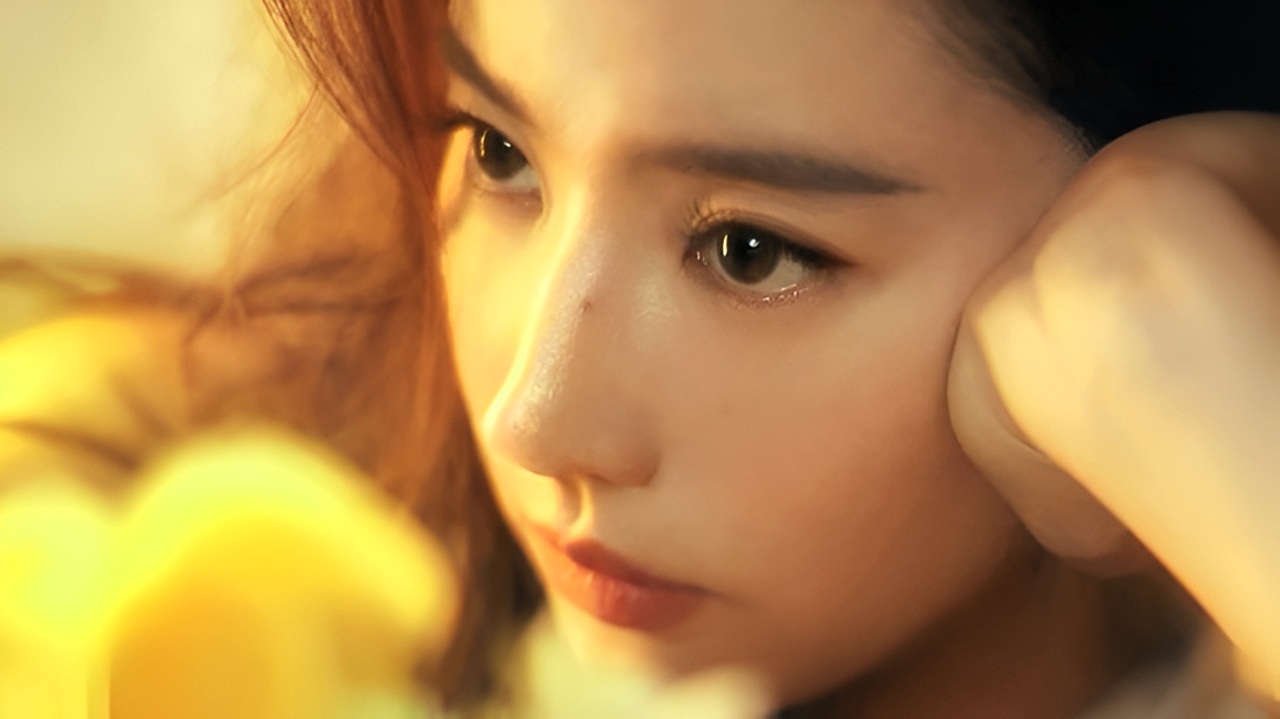
“The Tale of Rose” is about Huang Yimei, a beautiful woman, navigating through the different seasons of her life.
So our girl, Huang Yimei, is the “it girl” of her little inner circle. Everyone wants to be her or be with her. You get the gist, right? Not only is she genetically gifted, but she was also born into privilege. Although her parents are not filthy rich, they are doing well. Not to mention, Huang Yimei also has an incredibly loving and supportive brother, Huang Zhen Hua.
Even though Huang Yimei seems to have an upper hand in life, she is going to suffer. And the pain comes mainly from her choices in men. There are mainly three major relationships in Huang Yimei’s life. Zhuang Guodong is her first love, but things don’t end up very well for them due to different life ambitions.
Later on, Huang Yimei meets Fang Xiewen, the guy whom she married and her worst nightmare. After the divorce, she gets with Pu Jiaming, and together they have an intense but short-lived affair. But Huang Yimei is a resilient woman. This lady won’t let heartbreak stop her from opening her heart to someone new or simply enjoying life.
In her early forties, Huang Yimei meets a young man, He Xi. Although their romance never blossoms into something more serious, it was warm and sweet enough to leave an impression on both of them.
This all happens during a span of two decades. Meanwhile, there are other storylines going on in the drama. For instance, the audience will also watch Su Su, Huang Yimei’s best friend, overcome her trauma and welcome love into her life. The man that Su Su chooses to accompany her journey is none other than Huang Yimei’s brother, Huang Zhen Hua.
Some men become delusional when they fall in love.
“The Tale of Rose” sets itself apart from its peers because of its cinematography and writing.
After watching a few Chinese dramas, I realized that good cinematography in Chinese dramaland is not easy to come by. It seems that directors often tend to neglect that part while making a show come to life. Fortunately, that doesn’t happen with “The Tale of Rose”. Although the cinematography is not out of this world, it’s beautiful enough to avoid that TV soap opera feel.
Then the second aspect that I want to highlight is writing. Hats off to the writer of the show. She accomplished what many cannot. First, she made a “perfect woman” not annoying to watch. Second, she managed to carve out very interesting supporting characters that are more than just “fluff” or there to “fill up space”.
As I see it, Su Su and Tina show women on a spectrum. They are not perfect, but they are real. These women are definitely not what society expects them to be. It takes strength to go against the grain, and these women do it beautifully. The men in the show are also very different from each other, with their own insecurities and struggles.
Note: “The Tale of Rose”, the show, is based on a novel, “The Story of Rose”, written by Yi Shu. Nonetheless, I think the screenwriter did an amazing adaptation job.
Casting Liu Yifei as the protagonist of “The Tale of Rose” was the right decision.
Another aspect that I would like to highlight is the casting choice for the female lead, Liu Yifei. As I mentioned before, I think Liu Yifei lacks range in her acting, but given the right role, she can do amazing things.
For instance, Huang Yimei is a beautiful woman with an “x-factor” that makes everyone go crazy for her. And I think Liu Yifei has those star qualities. As a viewer, I believe it, and I don’t need the supporting characters to constantly remind me to see it.
And do you know why I’m making this comment? In recent years, something strange has been happening in Chinese dramaland.
Some shows cast a regular-looking actress to play the role of a hot woman, and it completely backfires. Worse still, every supporting character is made to insist on how beautiful she is, which feels awkward and almost embarrassing to watch. As a viewer, I’m not even upset with the leading actress—I’m frustrated with the creators for believing this approach would work.
Setting the right expectations is the key to watching a show like “The Tale of Rose”.
If you came into “The Tale of Rose” expecting an idol drama filled with easy romance and glossy perfection, you might feel disappointed.
The show deals with sensitive themes such as emotional manipulation, control and trauma. Therefore, I think the show is more suitable for a slightly older audience. The usual target demographic for an idol drama is kids and really young teens. Having said that, the older you are, the more you’ll get out of “The Tale of Rose”.
Huang Yimei’s life trajectory is not smooth. Through her marriage, she learns a lot about herself and boundaries. Also, I found Su Su’s storyline very difficult to watch, not because it wasn’t well done—quite the opposite. I think the depiction of her trauma felt incredibly real and heartbreaking. As an adult viewer, I often had to pause for a moment and then go back to the scene. It was that intense.
The pacing in the beginning of the show is rather fast, but then it slows down a bit throughout the show. I think it was an intentional decision, as it reflects Huang Yimei’s state of mind. Before her first heartbreak, Huang Yimei was living one of the best seasons of her life, so it made sense that the pacing was a bit faster.
One can see Huang Yimei’s relationships as the “Four Seasons”.
Note: This is not how the novel describes Huang Yimei’s love life, but this is my own interpretation of the events. Having said that, if you’re not interested, you’re welcome to skip this part.
Let’s start with Zhuang Guodong, Yimei’s first love. He would definitely represent summer. Their affair was intense and passionate, but like anything in life, everything must come to an end. What once shone so brightly eventually turned into fading smoke, leaving only a cold memory.
Then, there is Fang Xiewen. Huang Yimei met her former husband at a confusing stage of her life. So, if Xiewen were a season, he would be autumn. Not hot or cold, just “meh”. Although autumn has its own charm, it is not as popular as summer or winter.
Pu Jiaming is winter, for many reasons. He represents one of the most painful periods of Huang Yimei’s life. She met her soulmate but then had to let him go. Imagine what it’s like to love deeply a person only to learn that they are about to die. What an absolute nightmare. However, death is not the end of everything; it also marks the beginning of a new cycle.
Last but not least, let’s talk about He Xi. The young man represents Spring, a symbol for new beginnings. Despite her disastrous record with men, Huang Yimei is a lady full of life. Her heart is still open for love. The connection between Huang Yimei and He Xi is refreshing, but like spring, it’s fleeting. And that’s okay.
Through these four stages, Yimei matures emotionally, learning not what love should be, but what it feels like to truly live through it. Each man leaves her with lessons she carries forward, shaping her into the woman she becomes by the story’s end.
“The Tale of Rose” has an open ending, which is actually quite fitting.
Some viewers might find the ending of “The Tale of Rose” frustrating because of the ambiguity. But personally, I thought it made perfect sense.
Life rarely delivers neat resolutions, and Yimei’s journey was never about “happily ever after” anyway. Her story is about finding her voice and place in the world, and by the end, she finally achieves that.
The uncertainty of the ending also mirrors life: happiness doesn’t always look the way we expect. And that thought felt refreshingly mature to me. As a viewer, I’m okay with Huang Yimei staying single or continuing to explore who she wants to be.
Final Thoughts
“The Tale of Rose” is a beautifully crafted drama that pulls the viewers into a world of romance, heartbreak and self-discovery. The journey is full of emotional highs and lows, yet by the end, audiences leave with something they never realized they needed.
Overall, “The Tale of Rose” is a very noteworthy watch. It’s rare to see a Chinese drama that combines both beauty and emotional depth. “The Tale of Rose” isn’t just a show you watch; it’s an experience…
Final Rating: 🍎🍎🍎 (Excellent)


