This post includes a brief plot summary and a review of the 2020 Chinese drama “The Romance of Tiger and Rose”. Beware of spoilers.
“The Romance of Tiger and Rose” is a romantic comedy directed by Cha Chuen Yee, starring Zhao Lusi as Chen Qian Qian/ Chen Xiao Qian and Ding Yuxi as Han Shuo.
Genre: Fantasy, Comedy, Romance
After watching “Love Game in Eastern Fantasy”, I had to look up Ding Yuxi’s filmography, and that’s how I ended up watching “The Romance of Tiger and Rose”.
Short Review: “The Romance of Tiger and Rose” is a hilarious Chinese drama. Zhao Lusi is a versatile actress who can perfectly juggle between comedy and more melodramatic moments. Meanwhile, Ding Yuxi delivers a convincing performance as a hostage prince who struggles to balance his political duties with his love for the “enemy”.
“The Romance of Tiger and Rose” tells the story of a young screenwriter who is transported to her own script.
Chen Xiao Qian is a young woman who writes for a living. At the moment, Xiao Qian is working on a drama, but her script is terrible. Although the premise of the plot is intriguing, there are a lot of flaws in her world-building and character design.
The young screenwriter is working on a story where a lot of the traditional gender roles are switched. For instance, she created a matriarchal kingdom (Hua Yuan City) where women are the ones occupying the key roles in society: political, military and educational. Then, there is Xuanhu City, the complete opposite of Hua Yuan City, as it’s mainly a male-dominated society.
In Xiao Qian’s story, the two main characters, Han Shuo and Chen Chuchu, from opposite kingdoms, “fall in love”. The story is pretty cliché, but that’s not its main weakness. Xiao Qian fails to create a believable reason for these two to fall in love with each other. Because of her ego and lack of dating experience, she can’t see the problem until the lead actor of her drama points it out.
The actor’s remarks deeply upset the screenwriter. While revisiting her script, Xiao Qian falls into a deep sleep. Surprise, surprise, our protagonist wakes up in the very world she created, Hua Yuan City. However, she doesn’t wake up as Chen Chuchu but as a side character, who was supposed to die in the 3rd episode, Chen Qian Qian. This woman is the opposite of a virtuous lady; she is arrogant, loud and a trouble magnet.
Xiao Qian doesn’t want to die in her own script, but she also has to move the story forward. In the process, she falls in love with Han Shuo, and it’s mutual. However, this decision changes the entire course of the story…
The drama’s matriarchal society is a deliberate inversion of traditional gender roles in ancient China.
Historically, most ancient Chinese dynasties embraced strict patriarchal hierarchies: men dominated politics, military affairs, and household decision-making. As you might imagine, those were very tough times for women, because essentially, they didn’t have a voice.
However, there were few exceptions to the rule. Once upon a time, there was a Chinese woman named Wu Zetian during the Tang dynasty. After her husband died, she became the empress, but cases like this were very rare.
“The Romance of Tiger and Rose” pushes the gender role inversion to the extreme. Here, women manage armies, write laws, and choose husbands at will, while men are often relegated to ornamental roles or valued for domestic skills.
As I see it, this particular setup works as a playful social commentary, encouraging viewers to think about how gender power shapes relationships and society. It was interesting to watch a world where male characters struggle under the constraints that female characters often face in dramas.
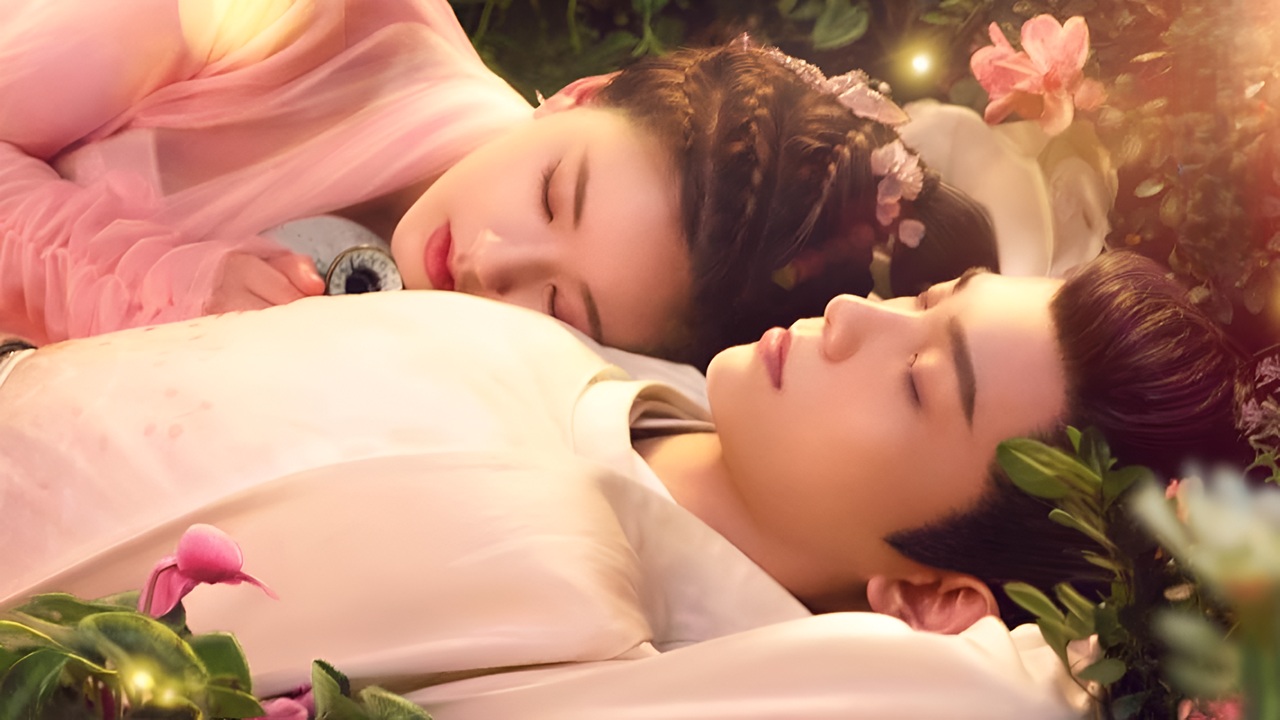
What sets “The Romance of Tiger and Rose” apart is its meta-layer.
Chen Xiao Qian, our protagonist, is a writer living inside the universe she created herself. And that’s a very intriguing setup because all the typical tropes found in dramas (love triangles, forced marriages…) are present but reframed in a different way. Qian Qian is not just a character in the story but also sort of a puppet master. She has insider knowledge because she is the one who wrote it.
For viewers familiar with genre patterns, it was fun to see those clichés dismantled from within. For instance, Qian Qian recognizing her “death flag” and actively dodging it is a direct parody of melodramatic tragedies. Likewise, side characters who would normally vanish after serving a plot purpose gain fleshed-out arcs because Qian Qian interferes.
It’s also worth noting how the drama plays with audience expectations regarding romance pacing. While most fantasy-romance series drag out misunderstandings for dozens of episodes, Qian Qian’s wit and meta-awareness actually accelerate certain plot points. However, her actions, also ironically, create new misunderstandings.
“The Romance of Tiger and Rose” remains relevant today, having inspired numerous dramas—most recently, “A Dream Within a Dream.”
“A Dream Within a Dream“, though lesser known, borrows heavily from “The Romance of Tiger and Rose.” Although it’s not a carbon copy, it’s very similar. For example, the protagonist is an actress who finds herself transported into the very script of the drama she’s meant to star in.
While “Tiger and Rose” uses its world’s gender structure to enhance satire and humour, “Dream” draws its comedic charm from the protagonist’s obliviousness toward the male lead’s true nature.
“The Romance of Tiger and Rose” has a more light-hearted, comedic vibe, while “A Dream Within a Dream” opts for a more surreal, tense ambience. Both shows explore the challenge of altering a predetermined narrative, but “Tiger and Rose” integrates romance more centrally, with the meta aspect serving the love story. In contrast, “Dream” uses it for existential questioning.
Both Zhao Lusi and Ding Yuxi delivered solid performances.
Zhao Lusi shines as Chen Qian Qian. Her comedic timing, expressive reactions, and ability to balance sass with vulnerability make her a perfect fit for a role that “dances” between parody and genuine emotion. The premise of the story is absurd, but Zhao Lusi plays it sincerely enough to keep viewers invested.
Ding Yuxi’s Han Shuo initially comes across as the typical male lead in Chinese dramaland—handsome, calculating, capable—but he gradually reveals a more playful, smitten and even silly side. The evolution feels natural, thanks in large part to the on-screen chemistry between him and Zhao Lusi. Their banter has rhythm; their eye contact lingers just the right amount; their interactions feel charged with real attraction.
Most importantly, they sell both comedic and romantic moments. Whether caught up in ridiculous misunderstandings or exchanging heartfelt confessions, the duo elevates scenes that could have felt purely trope-driven into moments of genuine engagement.
Final Thoughts
Personally, I really enjoyed watching “The Romance of Tiger and Rose”, but the drama is far from being flawless. There are plenty of nonsensical decisions—especially on Qian Qian’s part—that may have viewers shaking their heads.
After the leads’ break-up, the story derails a bit but gets back on track again for the big finale. In my opinion, the brief separation of the main couple was a bit unnecessary. Sometimes these plot hiccups can pull you out of the immersion.
Despite its flaws, I would still recommend viewers to watch the show. It’s filled with endearing side characters who are more than background “figures”. Here, they have personalities and charms of their own. This makes the fictional world feel fuller and more alive.
The ending of “The Romance of Tiger and Rose” is a rollercoaster of emotions. In the last episode, I cackled and I cried. Strangely enough, it reminded me of “Your Name” (2016 anime), the feeling of losing someone you love but never ever met in real life. While the ending doesn’t tie up every loose end neatly, it’s satisfying enough to eclipse imperfections.
Overall, “The Romance of Tiger and Rose” is a very noteworthy watch. It’s playful yet heartfelt, with a clever twist on traditional romance tropes. Its meta approach makes it one of the more refreshing entries in recent Chinese romance dramas. On the other hand, it also serves as a commentary on the current state of the Chinese drama landscape, filled with lazy writing and unoriginality.
Final Rating: 🍎+ (Good, Almost “Very Good”)


